 AUGUstus
Autonomous Driving VLA Model with
Unified Generation and Understanding
 1 Peking University
 2 XPeng Motors
 3 Fudan University
Email: yeyuqi0303@stu.pku.edu.cn and cjiangad@connect.ust.hk · WeChat: yuki-hahaha-yuki and Callmejohnjiang
 Paper
Paper Code
Code Models
Public Benchmarks
In-House Training
Training about 2 days
Deployment
Abstract
Vision-language-action (VLA) models have shown strong potential for end-to-end autonomous driving by leveraging world knowledge and understanding to achieve great performance in long-tail scenarios. However, current VLAs suffer from two major limitations: 1) Degeneration into vision-action (VA) models. To achieve low latency, regression-based and flow-based methods directly generate actions, yet they do not sufficiently leverage the VLM's understanding, leading to unsafe and unexplainable actions. 2) Autoregressive high latency. Autoregressive methods sequentially generate chain-of-thought (CoT) and action tokens, fully leveraging the VLM's understanding, but high latency makes deployment difficult. To enable low-latency deployment while properly using CoT to assist action generation, we propose AUGUstus1, an Autonomous-driving VLA model with Unified Generation and Understanding. Specifically, we first unify diffusion-based action generation and autoregressive CoT understanding in a single model, where understanding is optimized only to serve generation. More concretely, joint CoT supervision preserves the VLM's spatial understanding in the shared representation and keeps it useful for safer and more accurate trajectories. Second, we propose AUGUstus-mode, which orders the action generation before the CoT so that the CoT supervises the reliable action during training while inference needs only the action output, enabling low latency. Finally, we introduce AUGUstus-GRPO, a unified GRPO algorithm that jointly optimizes the action and CoT, further improving action performance. Extensive experiments demonstrate that AUGUstus achieves 94.6 PDMS on NAVSIMv1 and 90.7 EPDMS on NAVSIMv2, establishing state-of-the-art (SOTA) planning performance without scorer module. On nuScenes, our method achieves an average L2 error of 0.27 m and an average collision rate of 0.05%, both the best among the compared methods. To validate the practicality of AUGUstus, we train it on our in-house dataset using 512 NVIDIA H800 GPUs for approximately two days, then evaluate it on an internal 1,000 km dataset and preliminarily deploy it on a real vehicle, achieving 12 Hz operation.
1 AUGUstus refers to Augustus (Octavian), the first Roman emperor, whose consolidation of Roman authority symbolizes unification. Here, it denotes a unified generation and understanding VLA model.
Architecture
Public Benchmark Results
Driving Demonstrations
Public Benchmark Videos








In-House Driving Rollouts
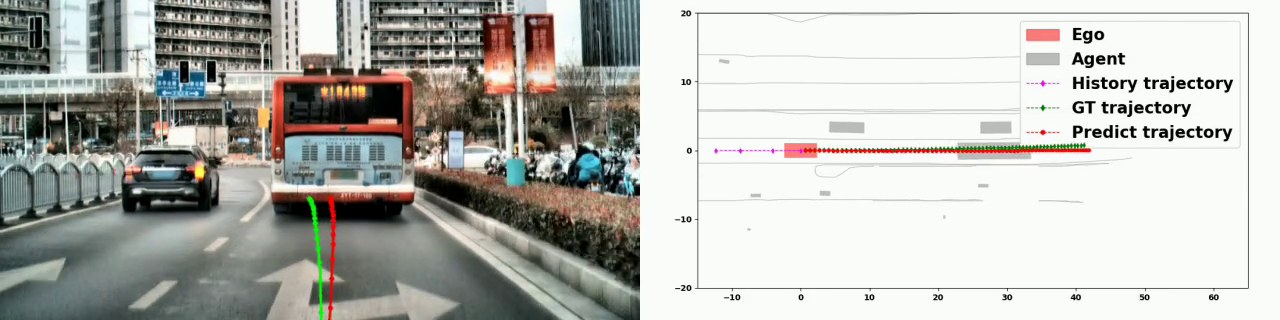
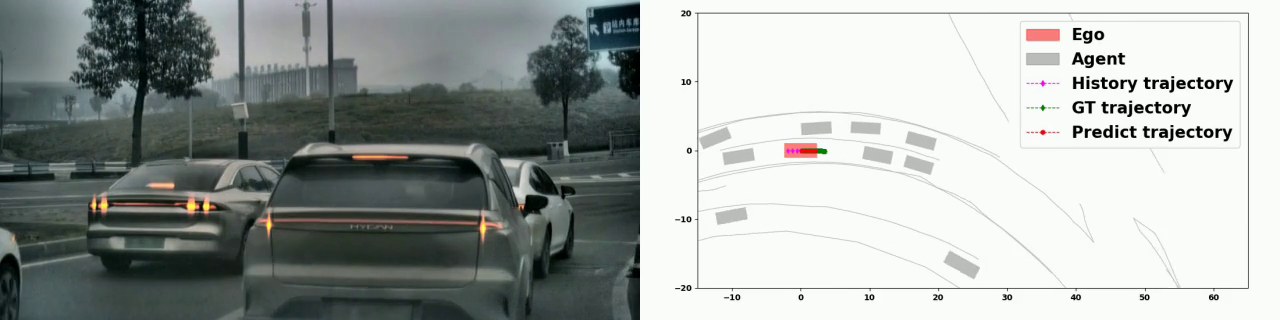
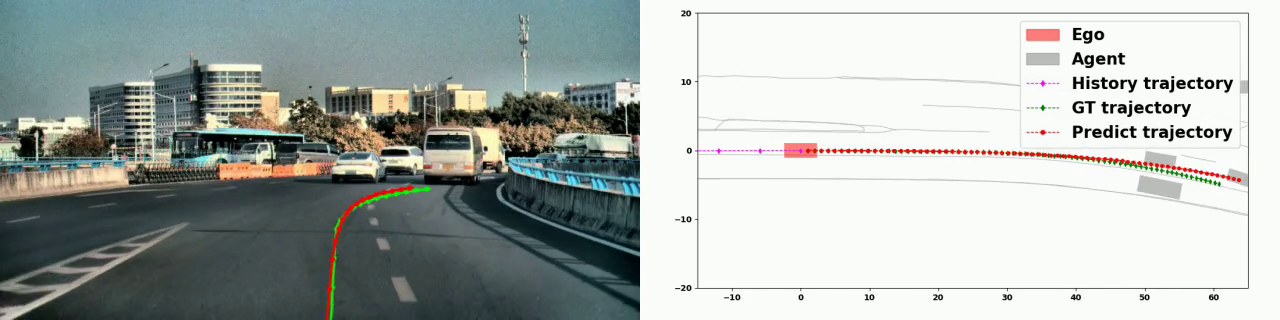
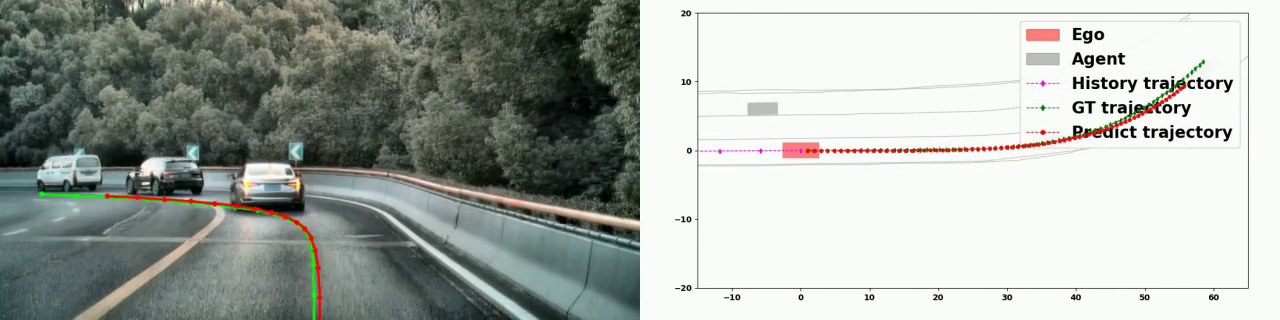
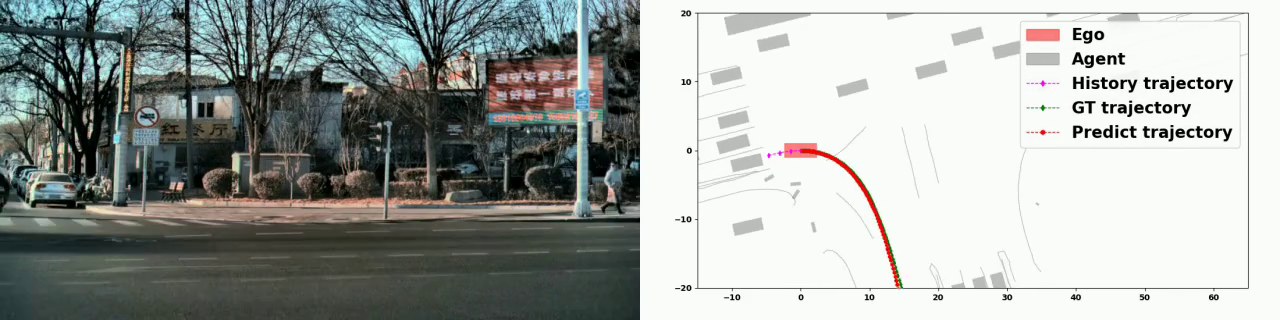
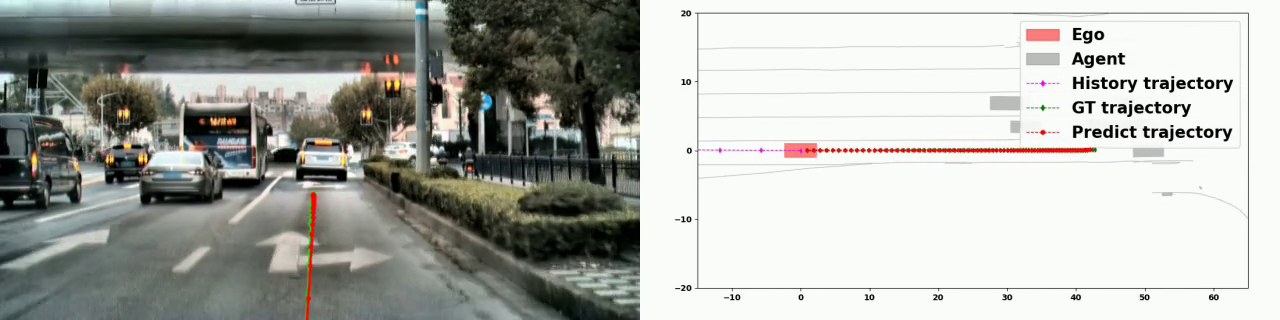
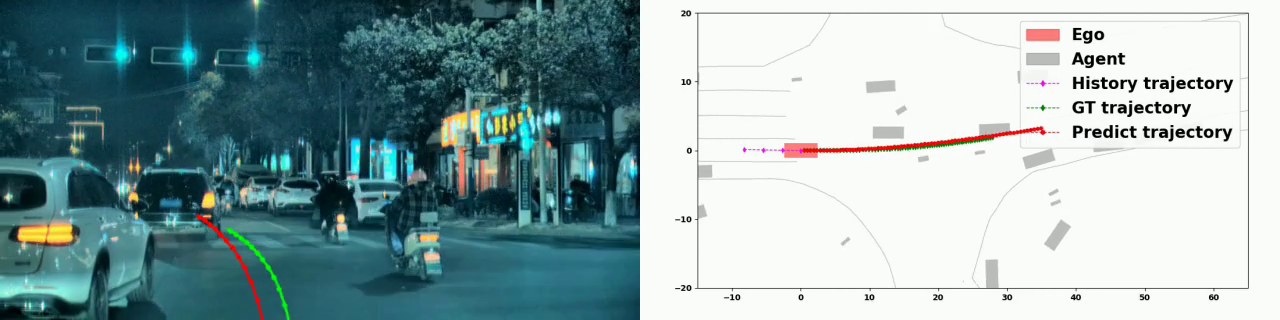
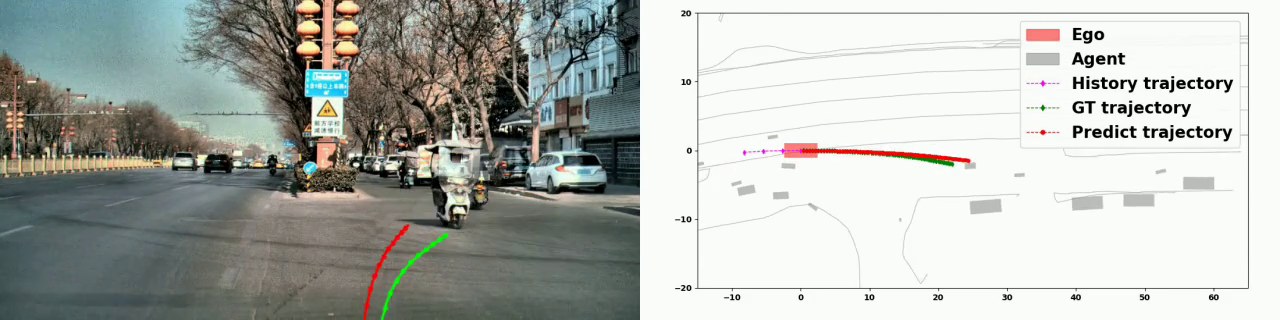
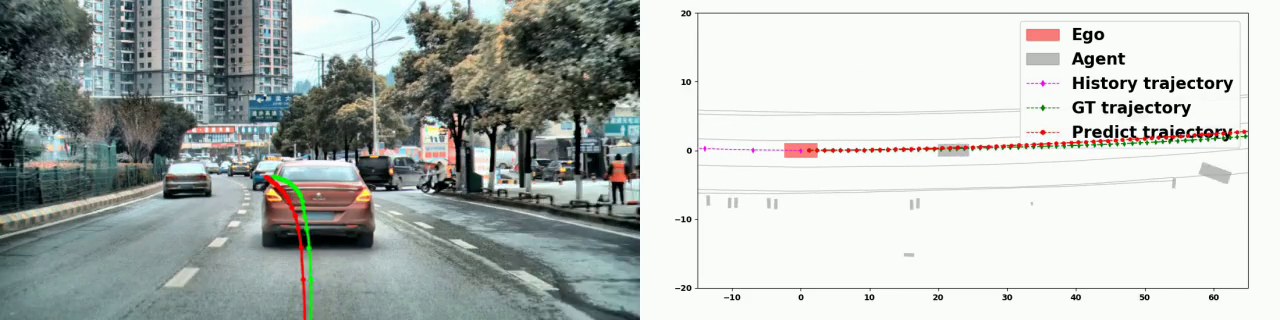
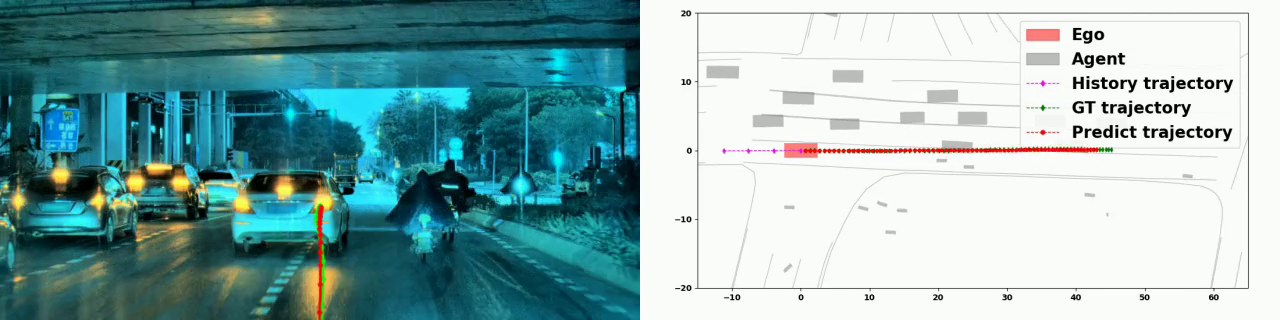
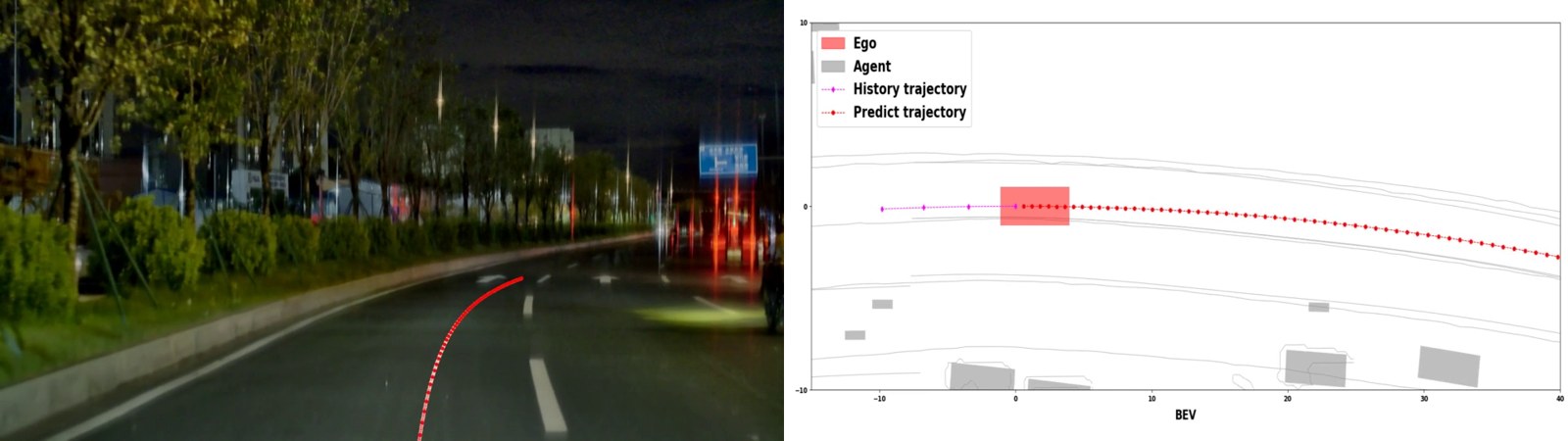
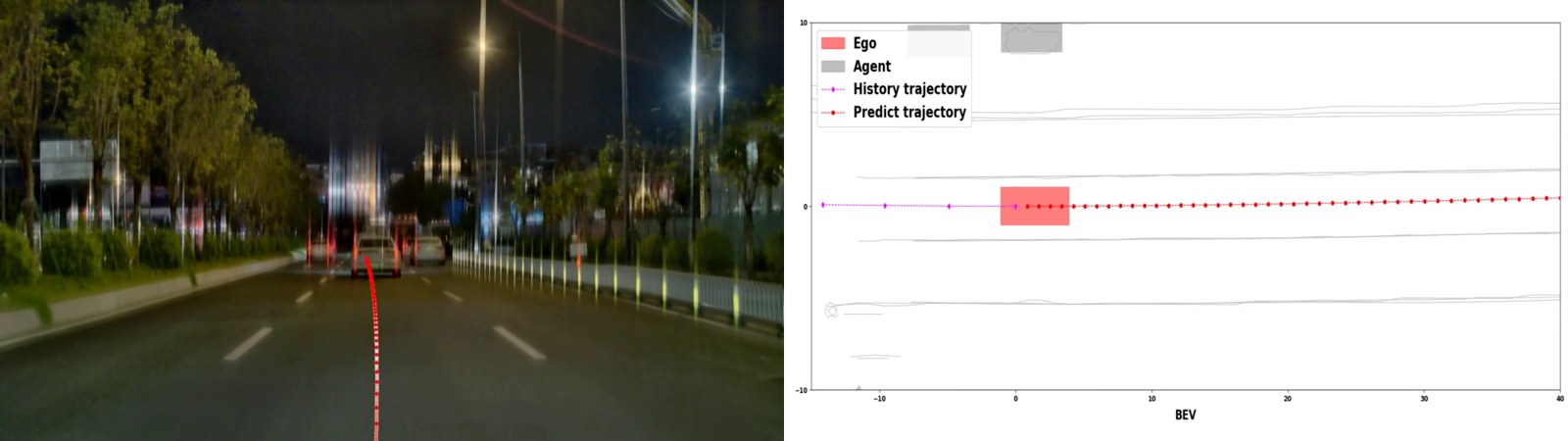
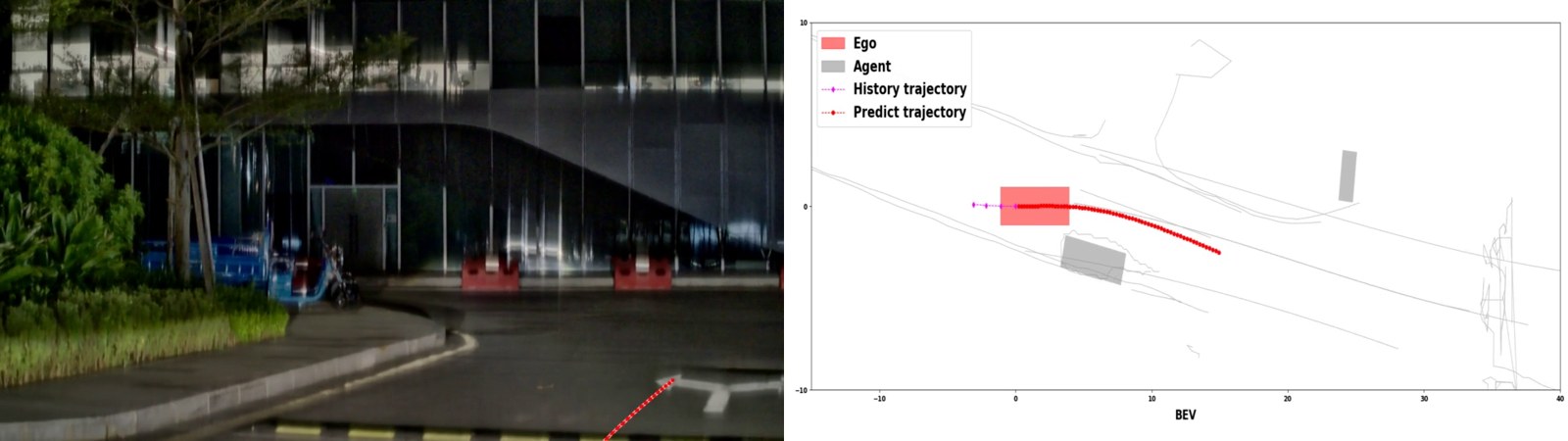
Qualitative Results
Public Benchmark: Comparison with Other Methods
Three-Stage Training: SFT, RL Stage I & RL Stage II
In-House: Comparison with Other Methods
In-House Driving Examples
CoT Attention
Trajectory Comparison: With and Without CoT
Citation
@misc{ye2026augustusautonomousdrivingvla,
  title={AUGUstus: Autonomous Driving VLA Model with Unified Generation and Understanding},
  author={Yuqi Ye and Caigao Jiang and Zhuonan Wang and Congyuan Pei and Chao Qu and Changhao Peng and Junhong Lin and Qize Yu and Zetian Song and Guangzhao Fu and Chongruo Wu and Shiyu Huang and Shuchang Zhou and Honggou Yang and Wei Gao},
  year={2026},
  eprint={2610.16985},
  archivePrefix={arXiv},
  primaryClass={cs.CV},
  url={https://arxiv.org/abs/2610.16985},
}